Vegetables and fiber
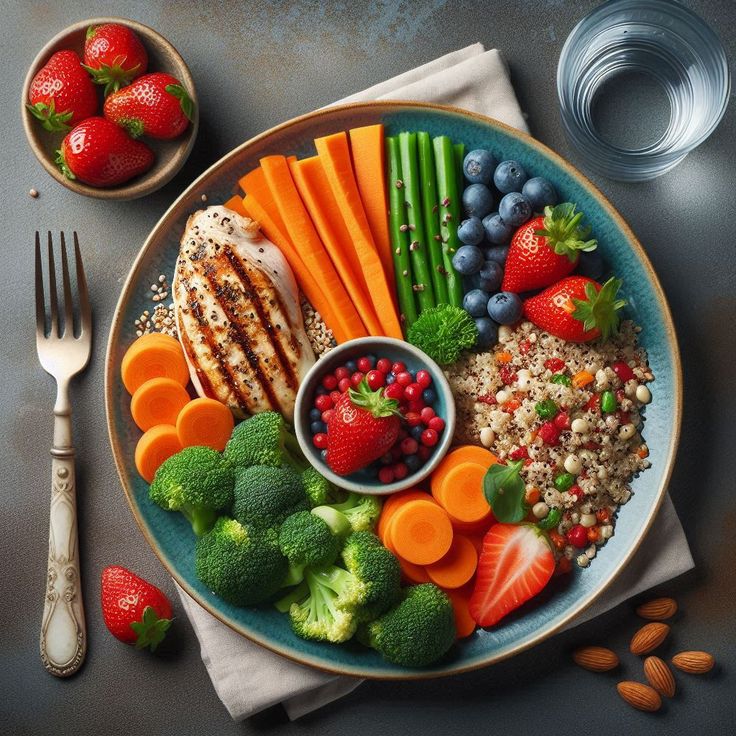
Roughly half the plate can feature vegetables, fruits, and fiber-rich sides. Variety across colors may help you include different nutrients in everyday meals.
Important: General nutrition education only—not medical advice. We do not provide medical services. Terms of Use
Our nutrition content explains how to combine foods in satisfying proportions. Information here is general in nature and intended to support informed conversations with your coach—not to serve as individualized medical advice.
Ask a questionRoughly half the plate can feature vegetables, fruits, and fiber-rich sides. Variety across colors may help you include different nutrients in everyday meals.
A quarter of the plate may include lean proteins, legumes, dairy, or plant alternatives—chosen to match your preferences and activity.
Whole grains, starchy vegetables, or other carbohydrate sources can fill the remaining portion, adjusted for training days or lighter evenings.
Understanding serving sizes, ingredient order, and added sugars helps you compare products without anxiety. We teach a step-by-step method: start with the serving size, scan the nutrient panel for context, then review ingredients for items you prefer to limit or include.
This educational process does not label foods as morally good or bad. Instead, it equips you to make deliberate choices aligned with your values and budget.
Water intake supports concentration and physical comfort. We discuss practical cues—thirst, urine color as a general indicator, and beverage habits—without prescribing rigid liter targets for everyone.
Slowing down before meals, noticing hunger and fullness cues, and reducing distraction during eating are behavioral topics we discuss in coaching. This is not psychotherapy, counseling, or medical care.
A brief check-in on hunger level can prevent automatic overserving when stress is elevated.
Noticing texture and flavor often increases enjoyment with smaller portions.
We help you build rotating lists based on staples, seasonal produce, and proteins you actually cook. Batch cooking and freezer-friendly options are introduced when your schedule benefits from them.
Coaching does not include financial or retail endorsements. Product mentions in sessions are illustrative examples only.
Generally, no—unless you have a documented allergy or a plan coordinated with your healthcare team. We emphasize inclusion and balance rather than broad elimination.
Hand-based guides and familiar household tools can approximate portions for home cooking. For precision needs, we may suggest working with a registered dietitian.
Explore how meals interact with your daily rhythm on our Energy page.
View energy topics